What’s the winning factor for most memorable Y Combinator companies? No, it's not their production budgets but their narrative discipline. One forgotten thumb drive was the core of Dropbox’s pitch. Airbnb never hid its survival move of selling novelty cereal.
Stripe paired an outrageous mission with a seven-line code demo. DoorDash founders personally answered the phone and you know it because it's their entire story.
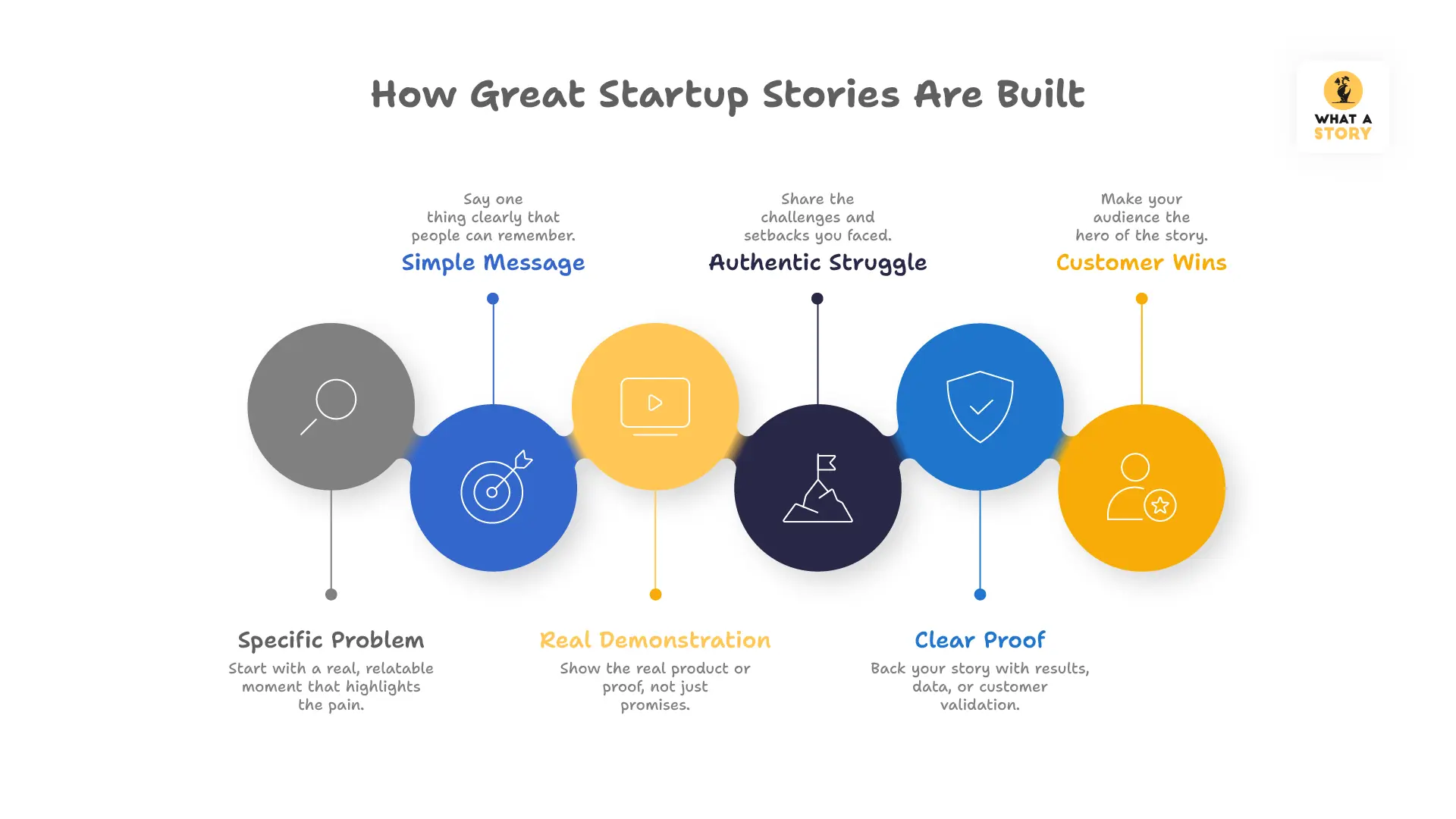
Great marketing and sales are more than skills and metrics, at its core storytelling plays a crucial role. YC startups have proven it. Below are eight storytelling lessons drawn from some of YC's most iconic companies, supported by founder interviews, YC resources, and public discussions.
More importantly, you'll learn how to apply the same principles to your own startup storytelling, founder narrative, or launch video.
Storytelling Lessons at a Glance
Key Takeaways
- Specificity beats scale. "I forgot my thumb drive on a bus" outperformed "we solve enterprise data sync."
- One message wins. Dropbox's technical complexity got reduced to three words: it just works.
- Rough demos build trust. Dropbox's screen-recorded demo grew the waitlist from roughly 5,000 to more than 70,000.
- Constraint is proof of conviction. Airbnb's founders sold election-themed cereal boxes to survive - still part of the story today.
- Big vision + tiny proof works. Stripe paired "increase the GDP of the internet" with a seven-line code snippet anyone could paste in.
- Live the story before you tell it. DoorDash's founders drove the deliveries themselves before writing a word of marketing copy.
- Repetition builds recognition. Drew Houston has told the same origin story for nearly two decades, on purpose.
- The viewer is the hero. The strongest origin stories open with a relatable person in a frustrating situation - not with the product.
1. Start With a Problem So Specific It Becomes Universal
Drew Houston didn't pitch Dropbox as "cloud storage." In his own account on the Y Combinator Startup Library, he traces the idea to a Chinatown bus ride from Boston to New York, where he realized he'd forgotten his USB drive and couldn't work for the rest of the trip.
That's the whole origin story and it's still the detail people remember more than fifteen years later.
The counterintuitive part is that the story works because it's small.
"We solve enterprise data synchronization" describes the same underlying problem, but it asks the audience to translate an abstract statement into a real-life experience. Most people won't.
A specific, slightly embarrassing moment does that work for them. They immediately picture themselves in the same situation, which is exactly why memorable startup storytelling begins with lived experiences instead of product categories.
Why it matters: Don't ask, "What problem do we solve?" Ask, "What's the exact moment someone felt this problem?" If a stranger can instantly picture that moment, you've found the beginning of your story.
2. Say One Thing, Not Everything
Dropbox was genuinely complex from the start. Continuous background sync, binary diffs, cross-platform file handling and how many of these made it to the pitch?
None.
Dropbox reduced a technically complex product into a single memorable promise: your files are simply there whenever you need them. Users never had to understand synchronization, versioning, or distributed storage. They only needed to remember one outcome.
And it's not easy for founders to go for this kind of reduction. Most people want others to know how technical the problem they solve to make their creation sound clever.
But the reality is, it's all in their minds. If you try to communicate five things at once you barely succeed in explaining one effectively.
This is the same discipline our team applies during the scriptwriting stage of every explainer we produce. Cut down to the single sentence you want someone to repeat thirty seconds after they've heard it.
What founders can copy: Start your scripting with one simple question first, “if someone remembers only one sentence thirty seconds after watching this video, what should it be?” When you have the answer to this, you build around it.
3. Show the Real Product, Even When It's Unfinished
Originally Houston made a demo for Dropbox, the three-minute screen recording video with his narration. He used his leftover music equipment from his old band.
Houston has said the goal was really just to get into YC - he posted it to Hacker News, and it sat at the top of the site for two days, which is exactly what led to Paul Graham's email.
You can still read the original 2007 Hacker News thread where the community picked it apart line by line - some skeptical, some sold instantly. Later on the same video was posted on Digg and what happened next was Dropbox grew the waitlist from roughly 5,000 to more than 70,000.
The traction came from showing the actual mechanism, drop a file in a folder, watch it sync elsewhere automatically with visible seams and all. None of it came from polish.
Watching a file appear instantly on another computer required almost no explanation. The product demonstrated its own value. A very important storytelling lesson for startups: no one really expects perfection from a company in its early stage. Not perfection, but certainly authenticity.
A simple demonstration of something real often builds more trust than a beautifully animated representation of something that doesn't yet exist. This is why some of the strongest product launch videos rely on genuine product interactions rather than polished marketing claims.
Reality is often more persuasive than polish.
Practical lesson: If your product genuinely solves a painful problem, show it working as early as possible. Authentic demonstrations create credibility that visual polish alone cannot.
4. Constraint Is Part of the Story, Not a Flaw to Hide
When Airbnb's founders were nearly out of money during the 2008 election, they designed limited-edition "Obama O's" and "Cap'n McCain's" cereal boxes and sold them for $40 apiece just to keep the company alive - a detail covered in Wharton's retrospective on Airbnb's early years.
It's a strange thing to still be talking about, and yet it's one of the most repeated parts of Airbnb's origin story - because it proves conviction in a way a polished pitch deck never could.
A story without setbacks often feels manufactured, even when it's true. The difficult periods are usually what make founders believable.
If your company went through an unglamorous phase before things started working, it's often worth keeping that part of the story instead of editing it out.
A quick note before the next lesson
By this point, another pattern is becoming clear.
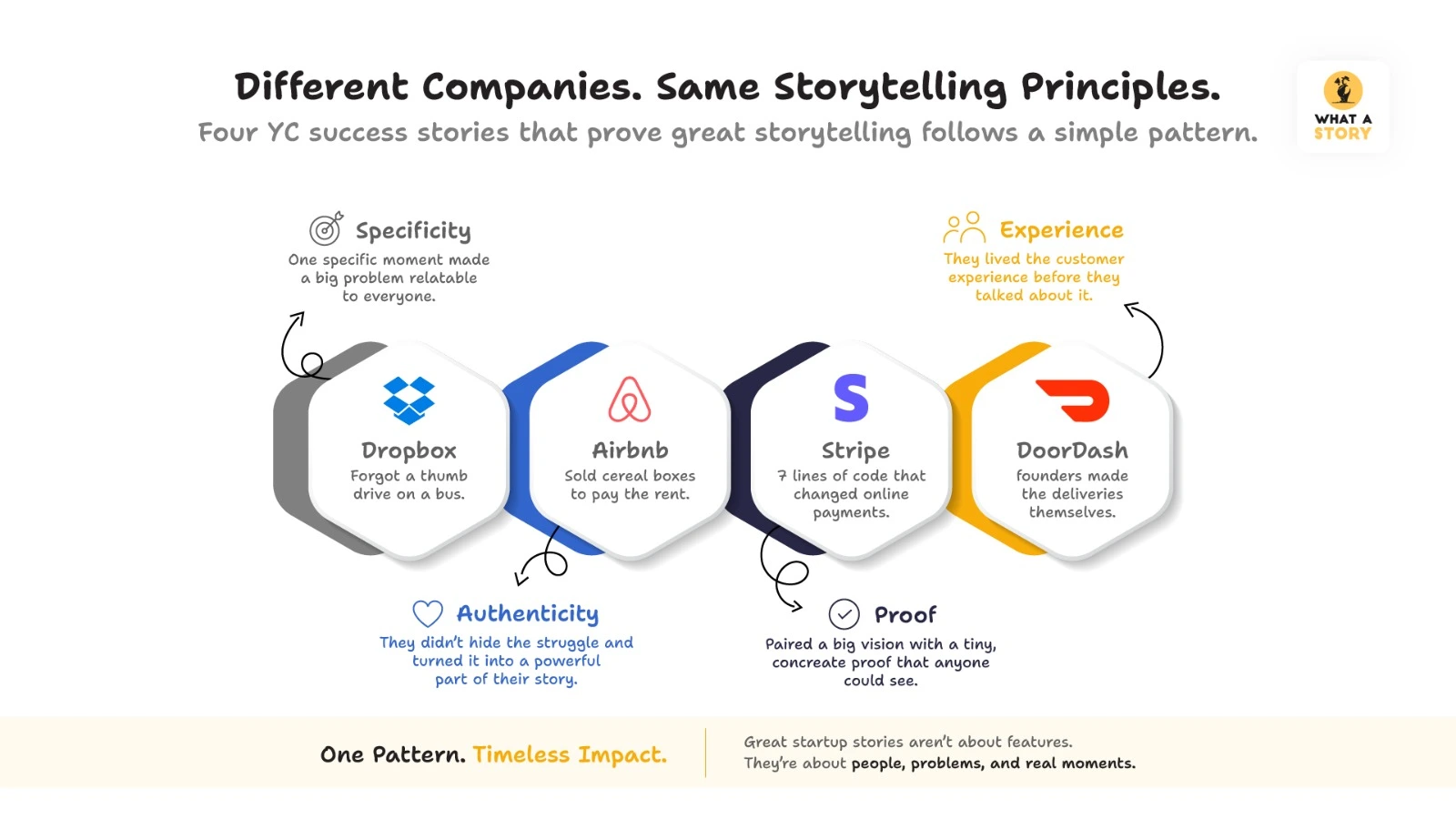
Dropbox teaches specificity. Airbnb teaches authenticity through struggle.
Different companies. Different products.
The underlying storytelling principle is exactly the same: memorable startup stories aren't built around features. They're built around moments people can picture, repeat, and believe.
5. Pair a Big Vision With a Tiny, Concrete Proof
Stripe's founders, Patrick and John Collison, framed their entire company around one deliberately oversized mission: to "increase the GDP of the internet." On its own, that line risks sounding like empty ambition.
What made it land was the contrast with something almost absurdly small and concrete: a payments integration that took seven lines of code, at a time when accepting payments online could take a developer weeks.
The founders backed that story up with a technique Y Combinator now teaches under its own name - the "Collison installation," described in Paul Graham's essay Do Things That Don't Scale.
Rather than sending prospective users a signup link, the brothers would ask for a laptop on the spot and install the product themselves, watching exactly where people hesitated.
The grand mission gave the story stakes; the tiny, hands-on proof gave it credibility. Neither works as well without the other.
Takeaway: An ambitious mission statement without a concrete, provable moment behind it reads as marketing. Pair the two, and each makes the other more believable.
6. Let the Story Come From Doing the Job Yourself
How did DoorDash come into existence? Before it was what it is today, it was Palo Alto Delivery. It had a bare landing page with eight PDF restaurant menus and the Google Voice number provided was forwarded to the personal cellphones of the founders.
According to co-founder Stanley Tang's own account of the company's early lessons, they were students in California at the time and didn't expect much from it - until the phone started ringing.
They picked up the first Thai food order, drove to the restaurant, and delivered it themselves, then kept doing that as call volume climbed from one to two to five to ten a day, often ducking out of class to answer the phone.
That period wasn't just scrappy marketing material - it shaped the product. Tang has said manually dispatching every driver themselves is what taught the team what their driver-assignment algorithm eventually needed to do.
The founders weren't imagining what customers and drivers needed; they were living it, one delivery at a time, before they ever tried to describe it to an investor or a customer.
Takeaway: The most convincing version of your company's story is usually the one you can only tell after doing the unglamorous version of the job yourself, not the one you can imagine from a whiteboard.
7. Tell the Same Story on Purpose, Over and Over
Houston has told the thumb-drive story in pitch decks, interviews, and keynotes for close to two decades, largely unchanged. Was that by accident? No. Because repetition is what turns a good anecdote into a recognizable brand narrative.
Often founders try to vary their origin story every time they tell. They think to keep it fresh this way. However, it goes against the grain in the way that the story only becomes the kind of thing people quote from memory once it’s been told consistently enough to stop sounding like a marketing copy.
Practical implication: Your product launch video shouldn't be treated as a one-off marketing asset. It should become the definitive version of your story that informs future interviews, fundraising conversations, blog posts, and sales presentations. Consistency is what turns a good story into one people remember.
8. Make the Viewer the Hero, Not the Product
None of the four stories above are really about technology. Dropbox's story is about a tired traveler who couldn't work. Airbnb's is about two broke roommates who needed rent money. DoorDash is about a shop owner turning down orders she couldn't fulfill.
In each case, the product resolves the story - it isn't the subject of it. Viewers connect far more readily with a relatable frustration than with an engineering achievement, because they've likely lived through the frustration themselves.
The strongest openings almost always start with a person stuck in a recognizable situation, before the product is introduced as the way out.
What Founders Are Actually Saying About This
This isn't just an internal-agency opinion - it's a live debate among founders themselves.
On Quora's thread on storytelling techniques for startup pitches, one experienced answer pushes back on story-first pitching for serious fundraising rounds, arguing that data and fundamentals should lead when real capital is on the line, and that narrative works better for demo-day sizzle than for closing a term sheet - a useful counterpoint worth weighing against the examples above.
A separate Quora thread collecting compelling stories startups have actually used in pitches shows founders sharing their own version of the "one specific moment" pattern described in Lesson 1, usually pulled from a real client interaction rather than a hypothetical persona.
Even the original Hacker News thread on Dropbox's YC application is worth reading end to end for this reason: several early commenters argued the product was unnecessary and could be replicated with existing tools like FTP and version control.
Houston's team ignored the noise and kept telling the same simple story anyway - which is itself a small case study in Lesson 7.
Expert Take
Across successful startup videos, the strongest differentiator is rarely animation quality alone. Clear messaging, a focused narrative, and a memorable central idea consistently have a greater impact on how people remember and talk about a product.
FAQ
What is the most important storytelling lesson from YC startups?
Specificity. The strongest origin stories - Dropbox's forgotten thumb drive, Airbnb's air mattresses, DoorDash's first Thai food delivery - center on one small, concrete moment rather than a broad category of problem. Concrete details are easier to remember and repeat than abstract claims.
Do YC launch videos need a big production budget?
No. Dropbox's first demo video was a screen recording made with no professional equipment, and it grew the company's waitlist roughly 15x in about a day.
Budget affects polish, not whether the underlying story works - see our breakdown of budget tiers for launch videos for a fuller cost comparison.
Is storytelling actually the right approach for a serious fundraising pitch, or just for demo day?
Opinions differ. Some experienced operators, as seen in discussions on Quora, argue narrative works best for demo-day energy while fundamentals should carry a real fundraising conversation.
In practice, the companies above used story and substance together - the story earned attention, and the product or traction backed it up once investors leaned in.
How do I find the "one thing" my company's story should say?
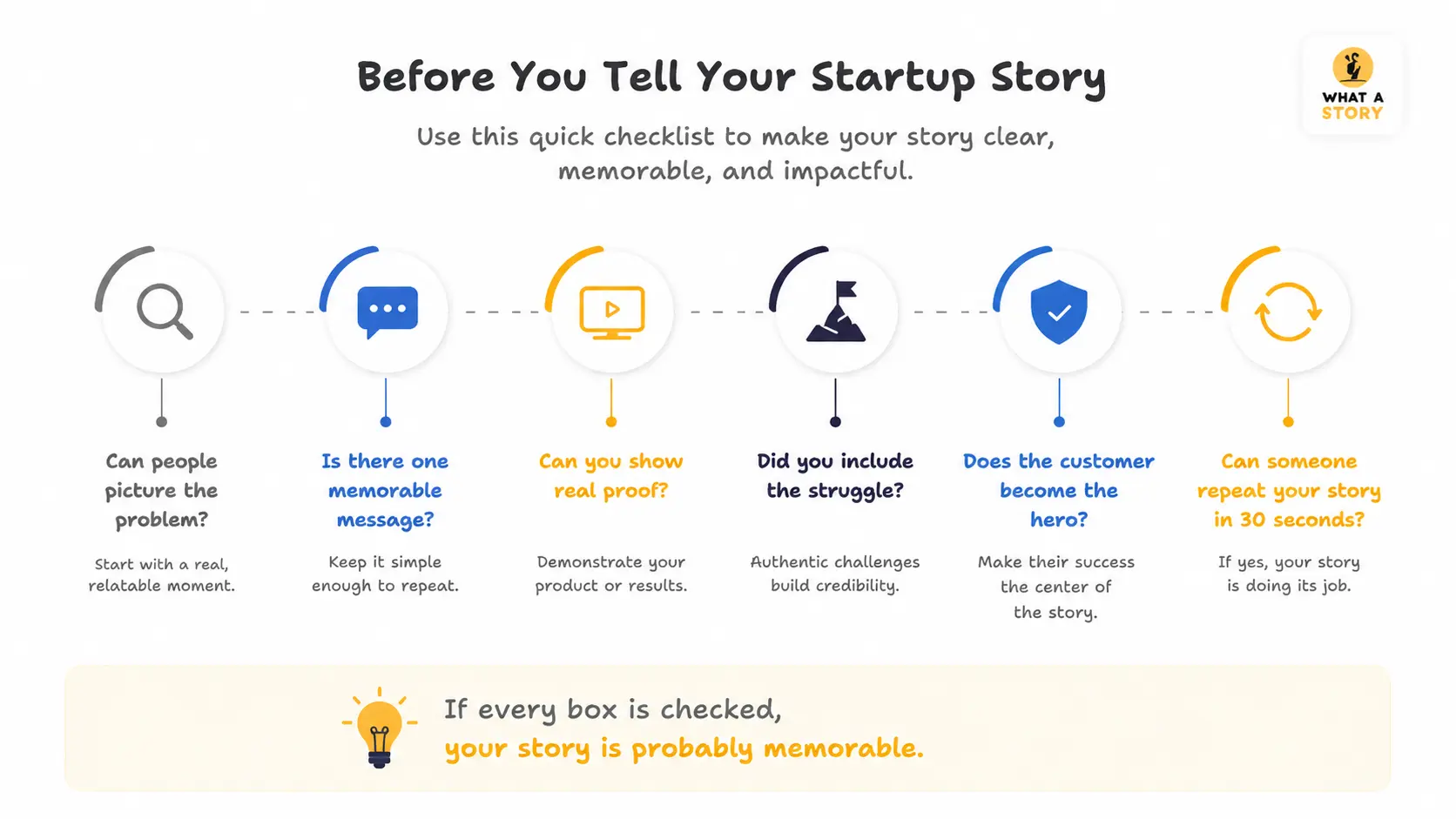
Write down everything your product technically does, then cut it to a single sentence you want a stranger to repeat thirty seconds after hearing it.
If you can't get to one sentence, the story needs more work before it goes into a script.
Should I include the messy, unglamorous parts of my company's early days?
Generally, yes. Constraint and visible struggle - like Airbnb's cereal box fundraiser or DoorDash's founders personally delivering Thai food - tend to build more trust than a story that sounds too polished to be true.
Where should the story live once we've made a launch video?
Everywhere. Treat it as the canonical version referenced in pitch decks, interviews, and your about page - not a one-time asset. Consistent repetition is what makes a story recognizable.
Conclusion
The companies you read in the article have their products built in different markets, they solved different problems and their growth paths were different too. Still, you could see a pattern that they all follow.
Started with a real problem, stayed focused on one clear idea, and backed their claims with something that people can see or experience themselves.
Those principles don't depend on your company size or budget. They're simply good storytelling.
Want help finding the single sentence your launch video should say? Book a call with What a Story - we specialize in SaaS storytelling and have shaped explainers and launch videos for hundreds of companies.
Note: This content is Reviewed for accuracy and editorial quality by Vikrant Singh Rajput - Project Manager @WhataStory