
For SaaS teams in 2026, explainer videos are more than just creative videos. They directly sit in the revenue path, influencing prospects to understand, analyze, and buy your product.
These videos are designed to move users from interest to adoption. However, the real question isn’t whether they work or not. Instead, it’s whether SaaS leaders can predict and measure their impact before and after production.
Expert Insight: "In a market where SaaS buyers spend only 5% of their journey talking to sales reps, the explainer video is often your only chance to make a first impression that sticks." - What A Story Editorial
In this blog, we break down explainer video ROI and how SaaS teams can measure signups, pipeline quality, sales velocity, and user retention. Also, we discuss SaaS video distribution levers, common myths, and points to consider while measuring long-term ROI.
What is Explainer Video ROI?
Explainer video ROI measures the revenue, conversions, and customer impact generated by a video relative to its production and distribution costs.
According to BookYourData's 2025 B2B Marketing Statistics Report, 87% of B2B marketers use video in their marketing efforts, making video one of the most widely adopted content formats for educating prospects and supporting buying decisions.
It is no longer “we got 50,000 views.” It is “this video helped close deals, grow MRR, and reduce friction for buyers and customers.” In practical terms, explainer video ROI shows up when:
Studies cited by Unbounce have reported conversion lifts of up to 80% when video is used effectively on landing pages, although actual results vary by industry and implementation.
Video combines visuals, motion, and audio, making complex information easier to understand and remember than text alone.
SaaS products are inherently complex. Multiple personas, long sales cycles, abstract value, and internal decision-making buying committees make text-heavy explanations inefficient.
A well-built explainer compresses understanding into minutes and repeats that clarity at scale.
That is why ROI from explainer videos in SaaS often compounds. The same asset supports marketing, sales, onboarding, and customer success simultaneously.
How to Estimate Explainer Video ROI Before You Spend
To calculate ROI on explainer videos, you do not need perfect data for estimation. Instead, you just need a bunch of realistic assumptions. Before production, SaaS teams should look at three inputs:
- Qualified reach - How many relevant users will realistically see this video on landing pages, emails, ads, or sales decks?
- Conversion influence - What small lift would materially matter? Even a 1-3% improvement in trial signups, demo bookings, or close rates can be significant for small and mid-market SaaS companies.
- Revenue leverage - Average contract value, expansion potential, and sales cycle length determine how much impact a single conversion has.
Explainer videos tend to deliver the strongest ROI when:
- You already have traffic or demand and need clarity, not awareness.
- Your product is difficult to understand from text alone.
- Your pricing or deal size is high enough that small conversion gains matter.
This estimation step is not about predicting exact returns. It is about clarity-checking whether an explainer has the potential to pay for itself multiple times over before you commit more resources to explainer video production.
Before production, forecast ROI like this:
ROI (%) = [Predicted reach × Average deal size × Predicted conversion lift (%)] ÷ Investment × 100
- Predicted reach: qualified viewers from pages, ads, and emails.
- Average deal size: ACV or first‑year value.
- Predicted conversion lift: realistic bump in trial signups, demo bookings, or paid upgrades after adding video.
- Investment: production cost + internal time + media spend.
How to Measure Explainer Video ROI After Launch
Once your explainer is live, ROI measurement should focus on behaviour and revenue signals, not surface-level engagement.
After launch, switch to actual data:
ROI (%) = (Value of conversions − Cost of investment) ÷ Cost of investment × 100
If you spend $5,000 on a video and track $35,000 in new revenue linked to it, the ROI is 600%.
Explainer videos usually shine when:
- You already have traffic from SEO, email, or paid video campaigns.
- You sell higher‑ticket plans where even a 1–3% win‑rate lift moves the needle.
- Buyers struggle to “see” the value from text alone.
Views and watch time still matter, but only as diagnostic signals. These metrics help teams understand the performance of their SaaS videos at every stage of the funnel, whether the opening works or not. If yes, do they stay engaged long enough to absorb the message?
As a result, it automatically proves ROI. For them, the strongest indicator is simple: if deals that interact with your explainer video convert faster, close at higher rates, or require fewer clarification calls, the video is doing real work.
If not, it’s just another piece of animation and will nose-dive in a few days. Check out our founder discussing how explainer videos boost funnel engagement through 10 proven strategies for video campaigns:
4 Common Myths That Ruin Explainer Video ROI
Several assumptions prevent SaaS teams from investing wisely and set them up with unrealistic expectations.
Holding on to these myths disturbs the true essence of explainer video ROI, leading marketers to further waste their resources on the wrong video production techniques.
Here are a few myths and their clarifications:
- You need a massive budget to see returns
Not true. In reality, many high-performing SaaS explainer videos originate from a modest production range. More importantly, ROI depends more on clarity and placement than production spend. - Longer videos perform better
No such concrete data is available. More runtime rarely improves understanding. Based on 70+ SaaS explainer videos produced by What a Story between 2024-2026, videos between 60-90 seconds generated the highest completion rates. - ROI equals high view counts
It doesn’t matter if your explainer video[s] rake up a few hundred thousand views. Large view numbers mean little if viewers do not act. In SaaS, ROI comes from conversions, deal movement, and reduced friction, not video impressions alone. - Explainer videos become outdated quickly
When focused on core value and problems rather than surface-level UI, explainers remain useful for years. Minor updates are often enough to keep them relevant.
Clearing these myths early helps teams evaluate SaaS explainer videos as durable business assets rather than one-off creative expenses.
3 Planning Decisions That Make or Break ROI
When it comes to explainer videos, the majority of ROI is locked in before animation even begins.
Planning determines whether the video becomes leverage or waste. There’s a set process to it, which can help SaaS teams extract maximum ROI from their videos:
- Begin your video production journey with one central objective
An explainer video cannot optimize equally for awareness, sales enablement, onboarding, and investor storytelling. Choose the outcome that matters most right now.
- Next, align marketing, sales, and product on the same narrative
Now this is critical because when each team tells a different story, the video loses force. As a result, there are multiple items being displayed and communicated at a time to the viewers.
- Finally, choose a production partner that understands SaaS buying behaviour, not just animation
A team that asks about ICPs, deal size, objections, and funnel stages will build a video that earns its cost back.
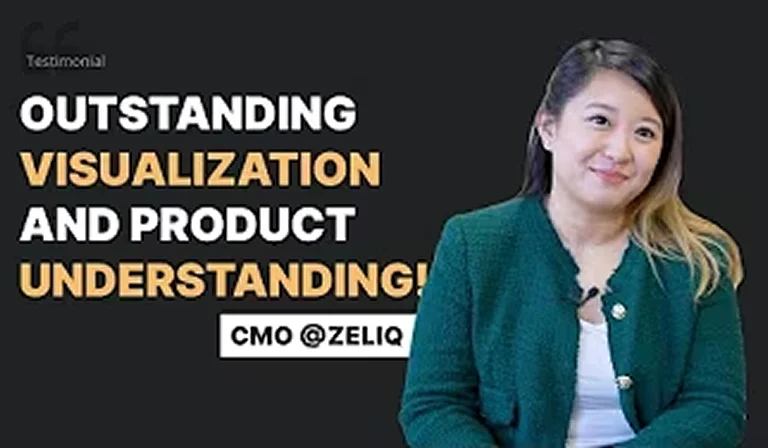
Case Study: Zeliq - By focusing on the core problem-solving capabilities of the platform, the Zeliq explainer video acted as a force multiplier for their sales team, resulting in clearer prospect conversations and higher-quality leads. Read the full Zeliq Case Study here.
How to Measure Explainer Video ROI Beyond Conversions?
Short-term conversions are only the first layer of explainer video ROI. The deeper value shows up as your product scales.
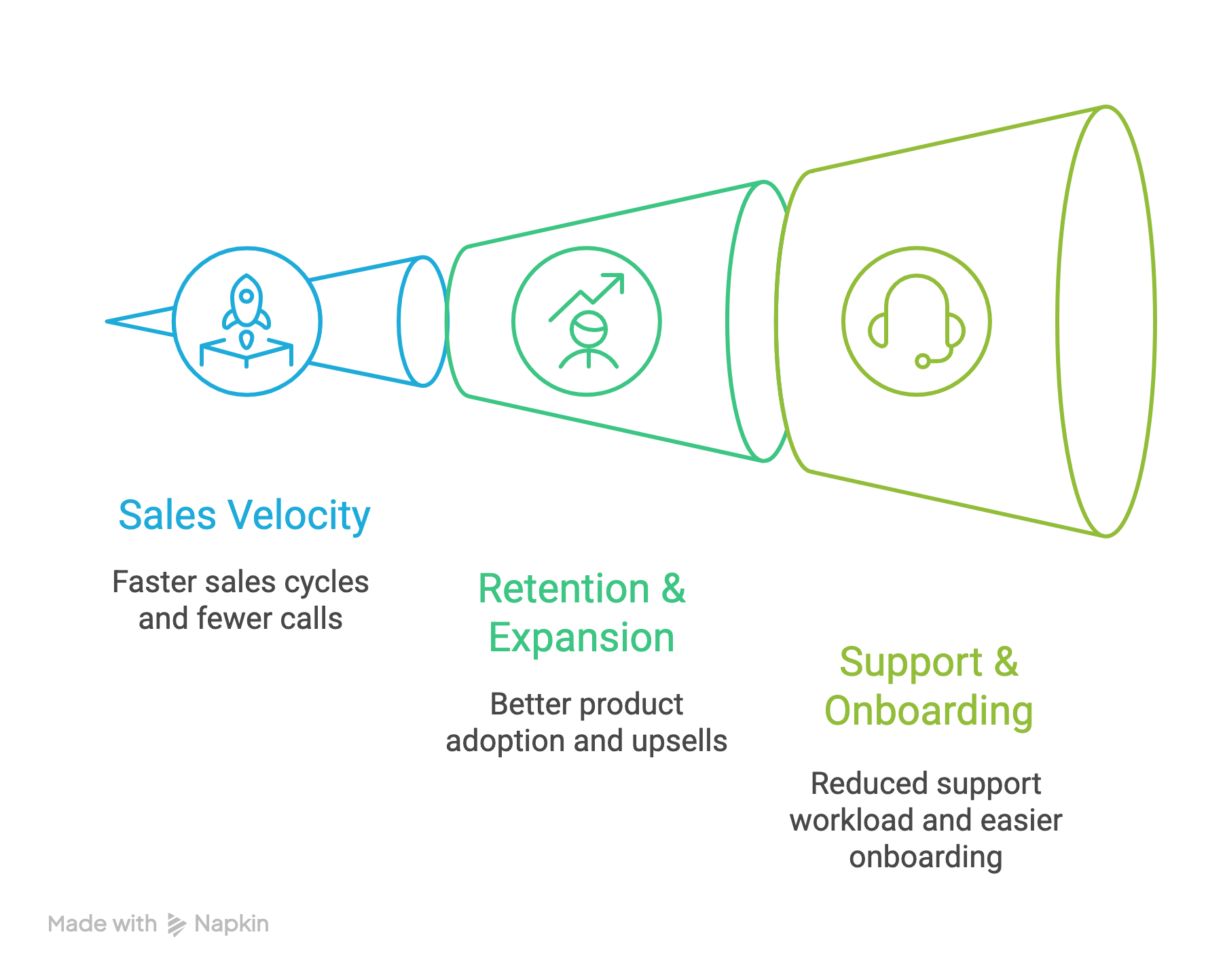
- Sales velocity: Teams often report shorter sales cycles once prospects arrive better educated. Fewer clarification calls and less back-and-forth signal that the video is doing pre-sales work for you.
- Retention and expansion: When users understand the product early, adoption improves. That clarity reduces churn risk and supports upsells and expansions over time.
- Support and onboarding impact: A strong explainer reduces basic “what does this do” questions. Support teams spend less time on repetitive explanations, and onboarding feels less overwhelming for new users.
Long-term ROI is best evaluated quarterly, not weekly. If deals touched by video close faster, retain better, or expand more often, the impact is real even if attribution is imperfect.
What Is a Good Explainer Video ROI for SaaS?
When SaaS teams evaluate ROI, the goal should not be to compare against a universal number. Returns vary based on product complexity, deal size, sales cycle length, and distribution strategy.
As a general benchmark:
For higher-ticket SaaS products, even a small improvement in close rates can generate significant returns. The most successful explainer videos are measured against business outcomes rather than view counts alone.
Conclusion
As creative business assets, explainer videos help reduce friction across your funnel, align teams around a single story, and scale clarity in ways text alone cannot.
The decision to invest comes down to timing and intent. If your product is hard to explain, your funnel leaks due to confusion, or your sales team keeps repeating the same explanations, an explainer video would be a great operational improvement.
The smartest SaaS teams approach explainer videos the same way they approach product features or growth initiatives: with clear objectives, realistic expectations, and a focus on outcomes that matter.
At What A Story, we design and produce explainer videos that complement SaaS products. When you do that, ROI stops being a question mark and becomes a measurable advantage.
Wondering whether an explainer video could generate positive ROI for your SaaS product? Our team can estimate potential impact based on your traffic, conversion rates, deal size, and sales cycle.
Note: This article was reviewed and updated by Rees Gargi, CMO at What a Story, who works closely with B2B SaaS brands on performance-driven video strategy, product positioning, and conversion optimization.
Frequently Asked Questions
What is a good ROI for an explainer video?
A successful explainer video should generate measurable improvements in conversions, sales efficiency, onboarding, or retention that exceed its production and distribution costs.
How long does it take to see ROI from an explainer video?
Most SaaS companies begin seeing early performance signals within weeks, while full ROI is often evaluated over a 3–12 month period.
Can explainer videos improve SaaS conversion rates?
Yes. Explainer videos help simplify complex products, reduce buyer friction, and support decision-making throughout the sales process.
How do SaaS companies measure explainer video ROI?
Common metrics include trial signups, demo bookings, sales velocity, customer acquisition cost, retention, and expansion revenue.


