
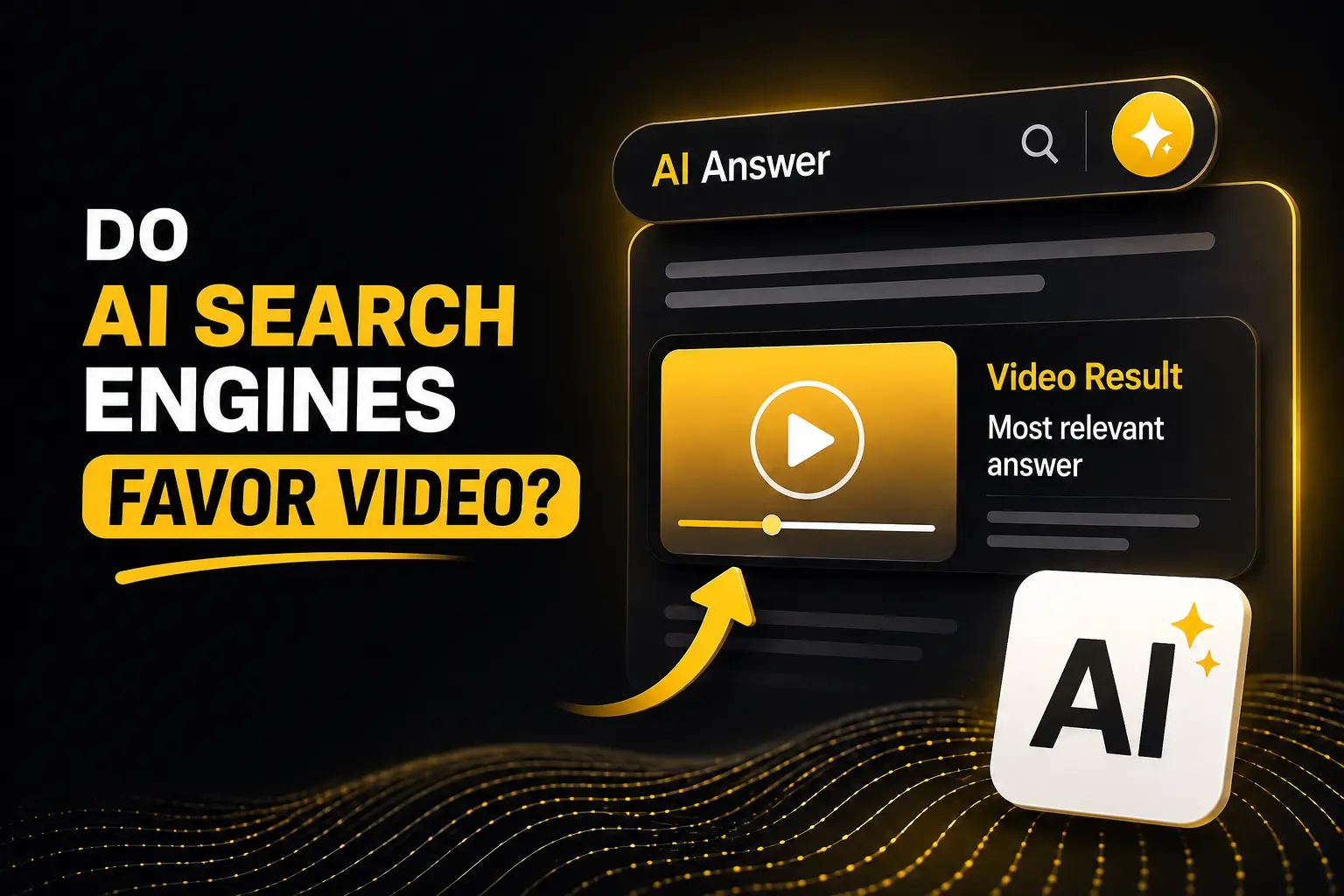
The short answer is yes - but not in the way many people expect.
Simply publishing a video won't make your website appear in ChatGPT, Gemini, Claude, or other AI assistants. Videos can support AI search visibility when they are part of a well-structured content strategy.
A video works best when it:
- Explains a topic clearly.
- Supports high-quality written content.
- Matches the user's intent.
- Is easy for search engines to discover.
- Includes descriptive titles, transcripts, and relevant context.
A video alone is rarely enough to improve visibility.
Why Videos Matter
AI assistants look for useful, trustworthy information.
A well-produced video can help explain a product, process, or concept more clearly than text alone. When paired with a detailed article, it creates a richer resource for both readers and search engines.
For example, a written guide about product demo videos becomes more useful when visitors can also watch a real example.
Videos Don't Replace Written Content
One common misconception is that publishing a YouTube video is enough.
It isn't.
AI systems cannot rely only on visuals. They also need written information that explains the topic in a structured way.
The strongest pages usually combine:
- Clear headings
- Helpful written content
- Relevant images
- Embedded videos
- Frequently asked questions
Each element helps explain the topic from a different angle.
Add Context Around Every Video
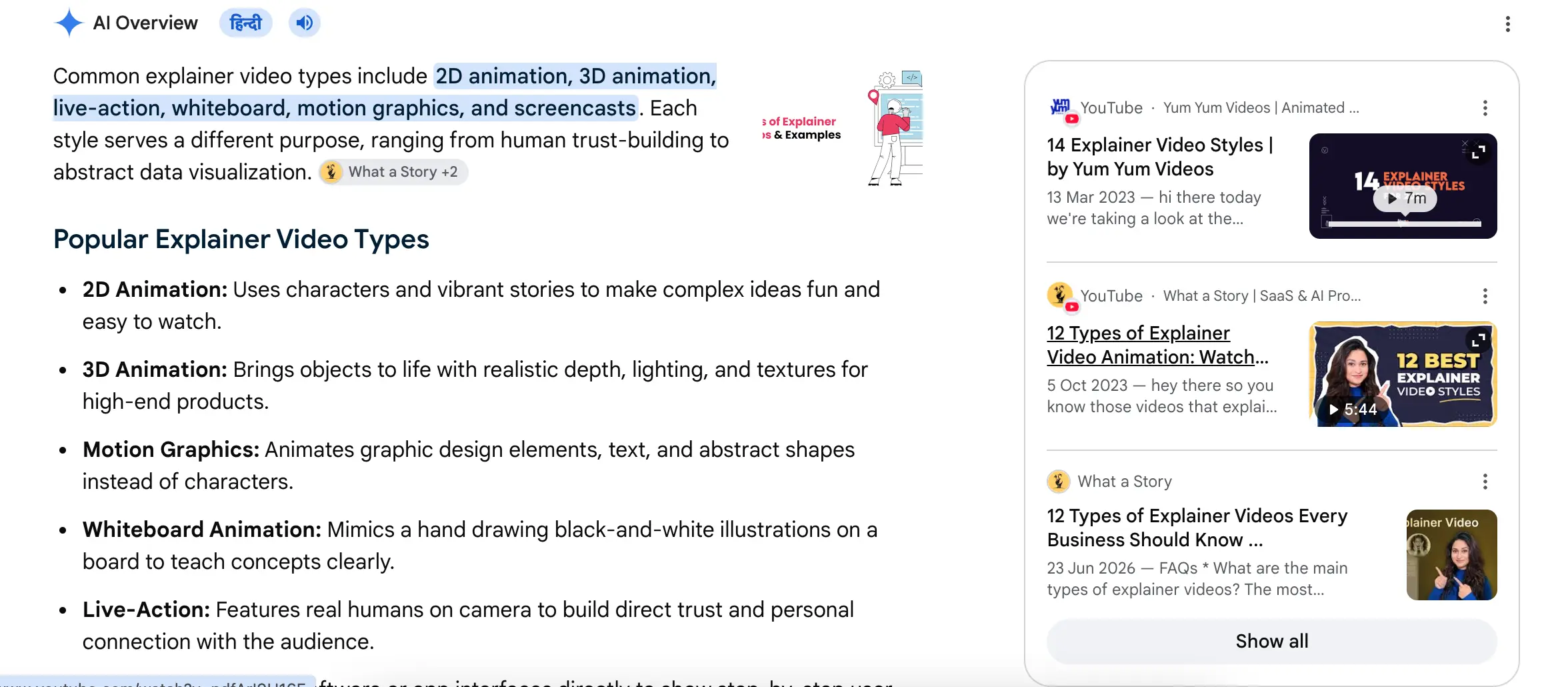
Instead of embedding a video by itself, provide supporting information.
Include:
- A short introduction.
- What viewers will learn.
- Key takeaways.
- A summary after the video.
- Frequently asked questions when appropriate.
This gives both readers and search systems more context.
Use Transcripts When Possible
A transcript makes the spoken content available as text.
This helps:
- Visitors who prefer reading.
- People using accessibility tools.
- Search engines understand the video's topic.
- AI systems connect the video with the surrounding content.
The transcript doesn't have to be word-for-word if a concise summary communicates the same information.
Focus on Helpful Content
A video should answer a real question.
Examples include:
- How a product works.
- Common mistakes.
- Feature demonstrations.
- Customer success stories.
- Step-by-step tutorials.
Videos created only for promotion usually provide less value than those that help someone understand a topic.
Organize Videos Around Related Topics
Publishing unrelated videos makes it harder to build topical authority.
Instead, group videos around the subjects your business wants to be known for.
For a SaaS video production company, that might include:
- Explainer videos
- Product demo videos
- Product launch videos
- Customer testimonial videos
- Video marketing strategy
This creates a stronger connection between your content and your area of expertise.
Don't Ignore Technical Details
A good video also needs a page that search engines can understand.
Make sure the page has:
- A descriptive title.
- A clear meta description.
- Relevant headings.
- Fast loading speed.
- Mobile-friendly design.
- Structured data where appropriate.
Technical quality helps search systems discover and understand your content more effectively.
Frequently Asked Questions
Does YouTube help AI search visibility?
Publishing on YouTube can increase your content's reach, but it doesn't guarantee that AI assistants will recommend your website.
Should every blog include a video?
Not necessarily. Add a video when it helps explain the topic better than text alone.
Do transcripts matter?
Yes. They make video content easier to understand for both people and search systems.
Can videos improve traditional SEO as well?
They can improve user engagement and make content more useful, which may support your overall search performance when combined with strong written content.
Final Thoughts
Videos can strengthen your visibility in both traditional search and AI-powered search, but they work best as part of a complete content strategy.
Rather than publishing videos for the sake of having them, focus on creating content that answers real questions, supports your written resources, and helps people understand your expertise.
When videos and written content work together, they create a stronger experience for readers and provide clearer signals about the topics your business covers.


