After delivering 1,200+ video projects, you start to see patterns. You realize that while every brand is unique, the challenges of creating a video are surprisingly universal.
In the early days of What a Story, we thought our job was just to make great animations. We were wrong. We quickly learned that a project doesn't succeed or fail based on the frame rate or the color palette; it succeeds or fails based on communication.
If the bridge between the client’s vision and our creative execution isn't solid, the video will collapse- no matter how pretty it looks.
Here are the five biggest lessons we've learned across hundreds of SaaS and tech video engagements about talking, listening, and actually getting things done.
1. Jargon is the "Silent Killer" of Clarity
We work with a lot of Tech and SaaS companies. These are brilliant people building incredibly complex tools. But there is a common trap: falling in love with your own jargon.
In early script meetings, we often hear phrases like "Our decentralized architectural framework optimizes synergistic data paradigms."
Our job is to gently say: "Cool... so, does it make the app faster or not?"
The Lesson: Good communication isn't about sounding smart; it’s about being understood. If we can’t explain the project to each other in plain English, we’ll never be able to explain it to the customer. We’ve learned to push back on "corporate-speak" early on to save the video later.
We've found that the simplest scripts often perform best. The goal isn't to impress viewers with terminology, but to help them quickly understand why the product matters.
2. The "Aha!" Moment Happens in the Discovery, Not the Edit
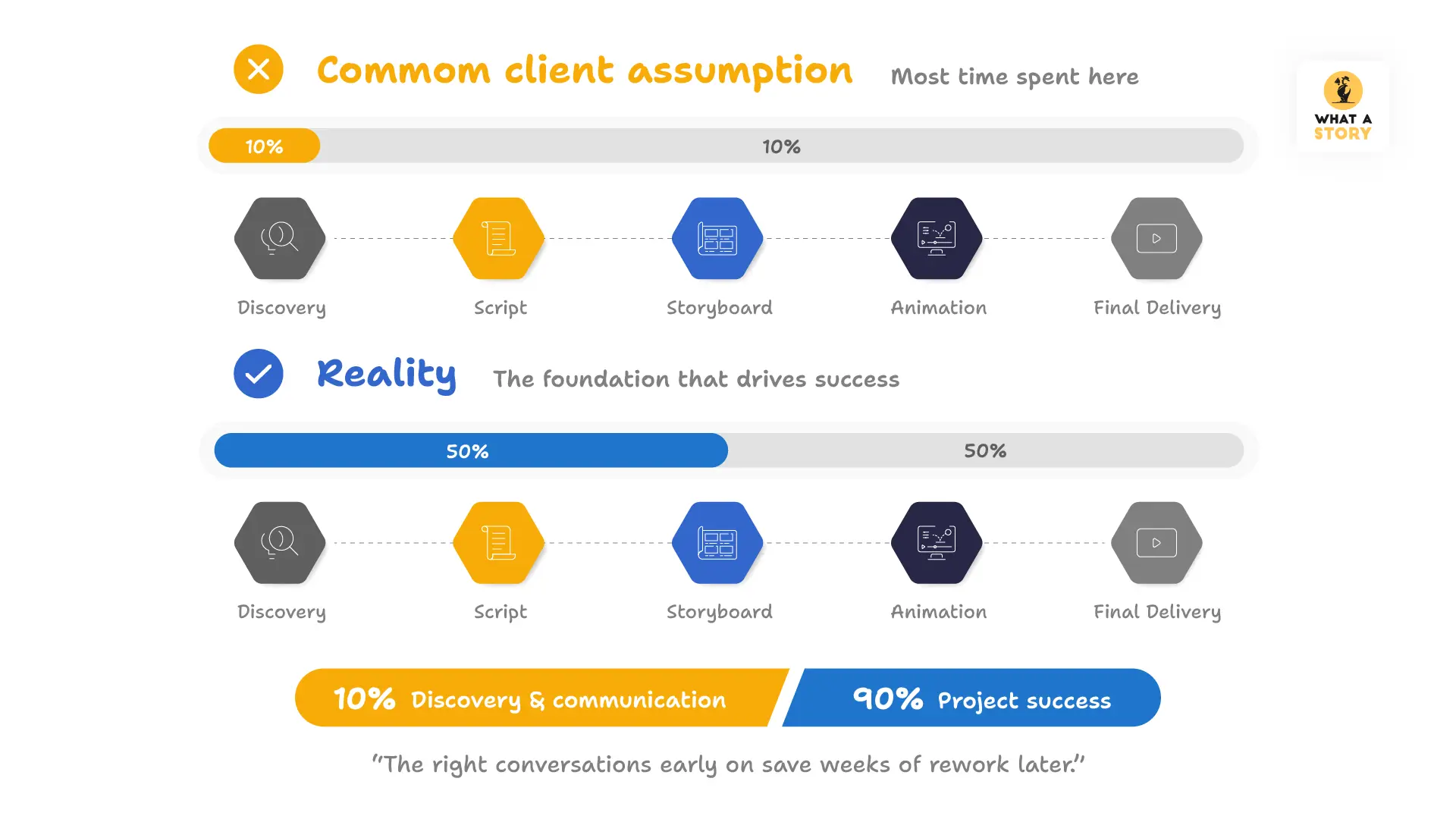
In our first few years, we were eager to start drawing. Now? We spend a lot more time talking before a single pixel moves.
More than once, a discovery conversation has uncovered the real story a client needed to tell, changing the entire creative approach before scripting even began.
What initially looked like a product video often turned out to be a trust-building story, a customer success story, or a positioning challenge.
We've learned that the most important part of the process is the Discovery Call. This is where we "download the client's brain."
If we don't understand the why - why this product exists, who it helps, and what keeps the founder up at night - the final video will feel hollow.
The Lesson: You can't animate your way out of a weak strategy. Communication in the first 10% of the project dictates 90% of the success.
That's why we treat discovery as more than a kickoff meeting. The deeper we understand the product, audience, and goals, the stronger every decision that follows.
3. "Looks Good" is a Dangerous Phrase
One of the weirdest things we learned is that "Looks good!" can be the scariest feedback to receive.
Early on, we’d get a "Looks good" on a storyboard, move to full animation, and then, at the very end, the client would say, "Actually, I don't think this represents our brand voice."
We realized that "Looks good" often means "I haven't looked at this closely yet."
The Lesson: We now guide our clients on how to give feedback. We ask specific questions: "Does this character feel like your target customer?" or "Is the transition at 0:45 too fast for a non-tech audience?" Strategic communication requires active participation from both sides.
We've also learned that feedback quality directly impacts project speed. A detailed comment during storyboarding can prevent hours of revisions during animation.
4. We are Partners, Not "Order-Takers"
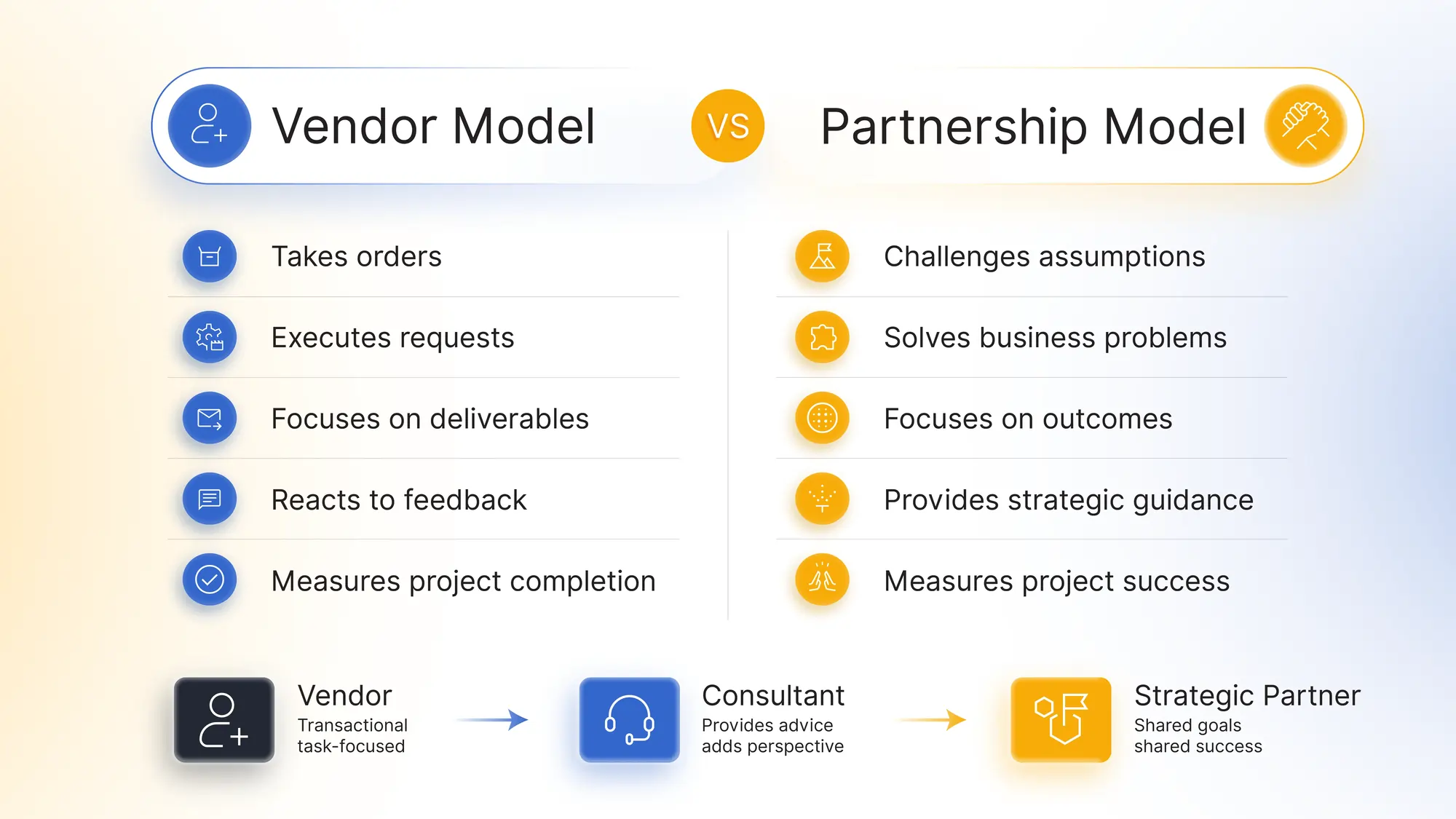
There’s an old saying that "the client is always right." After more than a decade of client collaborations, I’d argue that the client is always right about their goals, but they might be wrong about the execution.
We've seen clients try to fit 10–12 product features into a 60-second video. In almost every case, simplifying the message produced a stronger final result and clearer viewer recall.
The Lesson: Communication is about trust. Our best projects happen when clients treat us as an extension of their team- as consultants who are allowed to say "No" for the sake of the project’s ROI. When you move from a "vendor" relationship to a "partnership," the creative magic actually has room to breathe.
The strongest client relationships aren't built on agreement. They're built on mutual respect. Some of our best projects started with difficult conversations about simplifying a message, changing a creative direction, or focusing on a different audience. Those conversations often lead to better outcomes than simply saying yes to every request.
5. Silence Creates More Problems Than Bad News
One lesson we've learned repeatedly is that clients rarely get frustrated by problems. They get frustrated by surprises.
Every creative project encounters challenges. A timeline shifts. A script needs another round. An animation sequence takes longer than expected.
The problem isn't the setback. The problem is waiting too long to talk about it.
We've found that proactive communication builds trust even when things don't go according to plan. A quick conversation today is almost always better than a difficult explanation later.
The Lesson: Transparency creates confidence. Clients don't expect perfection; they expect visibility.
The Bottom Line:
At the end of the day, What a Story is in the business of storytelling. But you can't tell a great story to the world if you aren't telling a clear one to each other first.
Whether we’re working on a 12-day- FastTrack project or a deep-dive brand film, we’ve learned that the best tool in our arsenal isn't After Effects or a high-end microphone, it's a simple, honest conversation.
The biggest lesson from 1200+ projects isn't about animation, editing, or motion design. It's that great videos begin long before production starts - with clear conversations, aligned expectations, and shared goals.
Ready to tell your story? Let’s skip the jargon and get to the "Aha!" moment together.